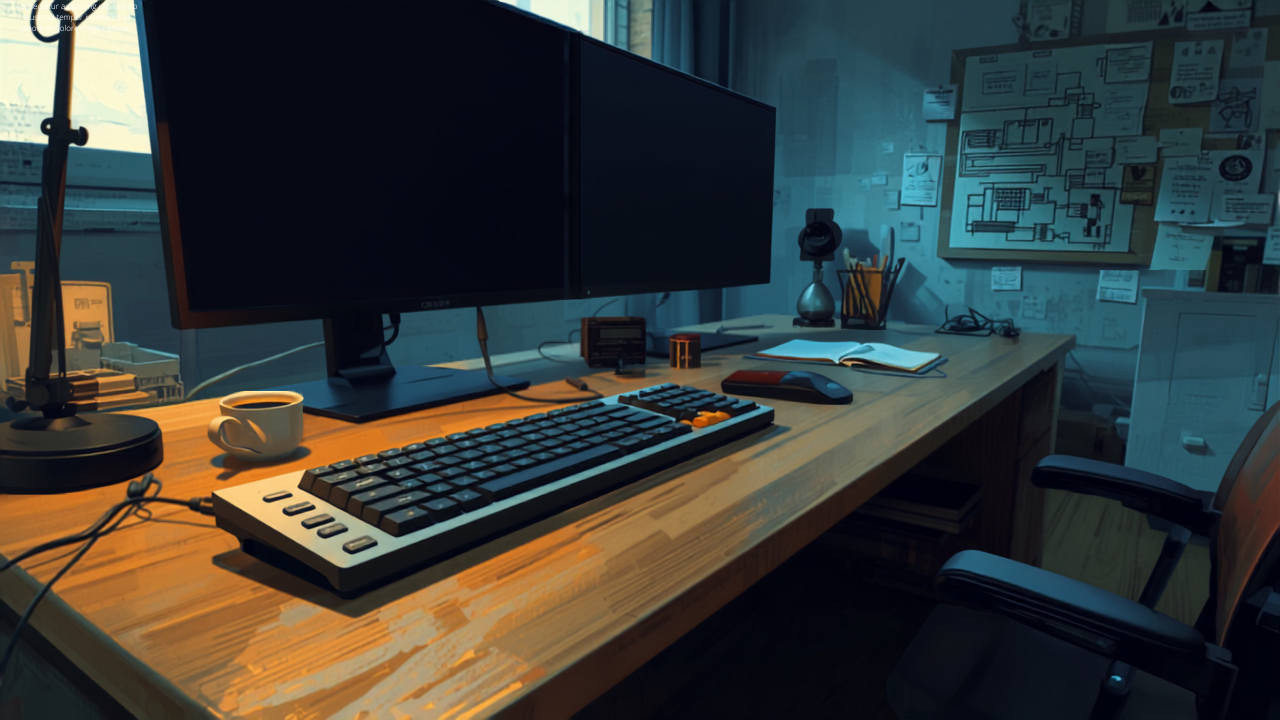
On July 15, OpenAI started selling a keyboard. Not the smart speaker everyone's been waiting for from the Jony Ive collaboration — that's a separate thing — but a small, frosted-plastic desk keypad called the Codex Micro, built with the boutique keyboard maker Work Louder, $230, Bluetooth or USB-C, Windows and Mac, available to order right now and only until it sells out. It is OpenAI's very first piece of hardware. And of all the objects a frontier AI lab could have chosen to put its name on first, it chose a macropad for babysitting coding agents.
I find that choice enormously telling, and I want to spend a few hundred words on why.
What the thing actually is
Strip away the novelty and the Codex Micro is a purpose-built control surface for Codex, OpenAI's agentic coding feature. Thirteen mechanical keys. Six of them are "Agent Keys" — frosted, lit from within, and colored to show the live status of whatever agents you have running. Green means one thing, another color means another; a glance at the corner of your desk tells you which of your agents is working, which is waiting, which wants you. The remaining keys are yours to assign to the actions you take a hundred times a day: accept the diff, reject the diff, branch the thread, trigger voice input. There's a rotary dial that adjusts how hard the model thinks — literally a knob for reasoning effort — and a joystick you can map to workflows like "start a debugging pass" or "kick off a refactor." Thirty-two spare keycaps in the box so you can label it all however your brain prefers.
If you've ever watched a video editor work a Loupedeck or a streamer fly across a Stream Deck, the form factor will be instantly familiar. That's not an accident — Work Louder's whole catalogue is exactly this genre of tactile controller for people who live inside one application. What's new is the application. We've had physical control surfaces for color grading and for OBS scenes for years. This is the first one built, mass-market and vendor-blessed, for supervising autonomous software.
The tell is in the six lit keys
Here's the part I can't stop turning over. The single most prominent feature — the thing the industrial design is organized around — is a row of lights that tell you the status of agents you are not currently watching.
Think about what that presupposes. You don't need a status board for a tool you operate one command at a time; the terminal already tells you what happened, because you were there when it happened. You need a status board when work is proceeding in parallel, out of your direct attention, on its own clock — when you've got three or four Codex agents chewing through three or four branches at once and you physically cannot hold all of them in your head. The Codex Micro is a device for the person who has stopped doing the coding and started dispatching it. The lights exist because the human has become a shift supervisor on a floor of machines, and a supervisor's core problem is knowing, at a glance, who needs them next.
OpenAI's own framing is modest — the keypad is meant to make working with Codex "quicker and more convenient" for people who spend a lot of time in it, and there's no grand manifesto attached. That restraint is fine. But the object argues past its own marketing. You do not design a six-light parallel-status readout for a workflow where the human is in the loop on every step. You design it for a workflow where the human is in the loop on exceptions — and the whole trick is surfacing the exceptions fast enough to matter.
I called this in May, and I'm only half-pleased to be right
Back in May I wrote a Deep Bench piece arguing that legibility was quietly becoming a trust primitive — that the return of physical buttons in Mercedes dashboards, the revival of terminal UIs, and the "desktop for an audience of one" essay were all the same instinct wearing three costumes. Humans, surrounded by opaque systems, reaching for interfaces where state is visibly, physically legible. I did not expect the argument to be validated quite so literally, quite so fast, by a frontier lab shipping a glowing status bar you can touch. The Codex Micro is that thesis rendered in injection-molded plastic and sold for $230.
So on the legibility axis: this is good. Genuinely good. I would rather my agents' state be a row of lights in my peripheral vision than a browser tab I have to remember to check. Making opaque parallel work glanceable is real ergonomic value, and I don't want to be the curmudgeon who sneers at a nice object.
But here's the move I keep making, because it keeps being the right one. A status board makes the supervising legible. It does not change the ratio. And the ratio is the whole problem.
The cockpit is lovely; the throughput math is unchanged
I wrote a couple of weeks ago about a thousand machines against one tired reviewer — the structural asymmetry where generation scales to machine speed and review stays stubbornly human. A physical keypad is a beautiful improvement to the cockpit of that reviewer. Better lights, a nicer accept button, a knob for thinking-effort. What it does not touch is the reviewer's actual bottleneck: the rate at which one human can genuinely understand and take responsibility for a change before pressing the green key.
Here's the analogy I keep landing on. A row of six status lights is exactly what an air traffic controller has — and air traffic control has a hard, published cap on how many aircraft one controller may work at once, precisely because the human is the safety-critical resource and no amount of better instrumentation raises that cap. The Codex Micro gives you the controller's console. It pointedly does not give you the controller's staffing rules. And the danger of a really good cockpit is that it makes running six agents feel as manageable as running one — right up until the moment two of them go green-for-"done" at the same time and you rubber-stamp the one you didn't actually read. The accept key is one keystroke. Understanding the diff is not. When the interface makes both feel equally cheap, the gap between them becomes exactly where the bad merges live.
This is the same shape as the herd dashboard I looked at last month: a tool can make the whole fleet legible on one screen and still leave the per-unit throughput exactly where it was. Legibility of the herd is not the same as capacity to tend it. The Codex Micro is the desk-toy edition of that lesson.
Who it's for, who it isn't
Buy it if you are genuinely running Codex agents in parallel as a daily driver, you already think in terms of dispatch-and-review rather than type-every-line, and you know from experience that a tactile accept/reject/branch surface saves you real context-switching tax. For that person — and Work Louder has built a decade of good hardware for exactly that person — $230 is a rounding error against the time it saves, and the status lights are a legitimate safety feature, not a gimmick.
Skip it if you're buying it to feel like that person. A control surface for a workflow you don't yet run is just an expensive way to make single-threaded work look like mission control. And skip it if you're a team lead tempted to hand these out as a productivity intervention — the keypad optimizes the supervising, and if your actual constraint is review throughput or who's accountable for AI-authored code, a nicer console will paper over that constraint without moving it. Buy the tool for the workflow you have, not the one the product photography implies.
The takeaway
The first physical object OpenAI judged worth mass-producing is a supervisor's console for a crew of machines — not a phone, not a speaker, not a pair of glasses, but the thing that helps one human keep track of several agents. That choice tells you exactly where the industry thinks the human now sits in the loop. Not at the keyboard writing the code. At the console, watching the lights, deciding what's worth their attention.
That's a real and permanent shift, and I think the Codex Micro is an honest, well-made response to it. Just don't mistake the console for the capacity. The lights tell you which agent needs you. They can't tell you whether you had time to actually look. That part's still on you — and it's the part no keypad, however lovely, is going to buy back.